
Fall Arboriculture Meeting 2025
WHEN: In catch-up, starting mid-December
WHERE: On request, from mid-December to mid-January
Preliminary Program
Content presented on Tuesday, November 25, 2025
Opening of the 2025 Fall Arboriculture Meeting
Guidelines for presentations

Speaker: Marie-Claude Daoust
Description: Since October 1st, the permanent occupational health and safety plan in Quebec is now officially in effect. This session will allow you to learn more about the state of affairs regarding employer obligations to identify and analyze psychosocial risks at work. Reflection points and practical advice will be presented to help you with this transition.
Bio: With a degree in business administration and 19 years of field expertise, she has built her reputation by supporting small and medium-sized enterprises in their prevention efforts. Leading a dynamic team of prevention advisors, she orchestrates innovative strategies that place safety at the heart of organizational concerns. She is passionate about innovation in occupational health and safety, particularly on the subject of psychosocial risks, and provides concrete solutions that revolutionize the traditional approach to risk management.
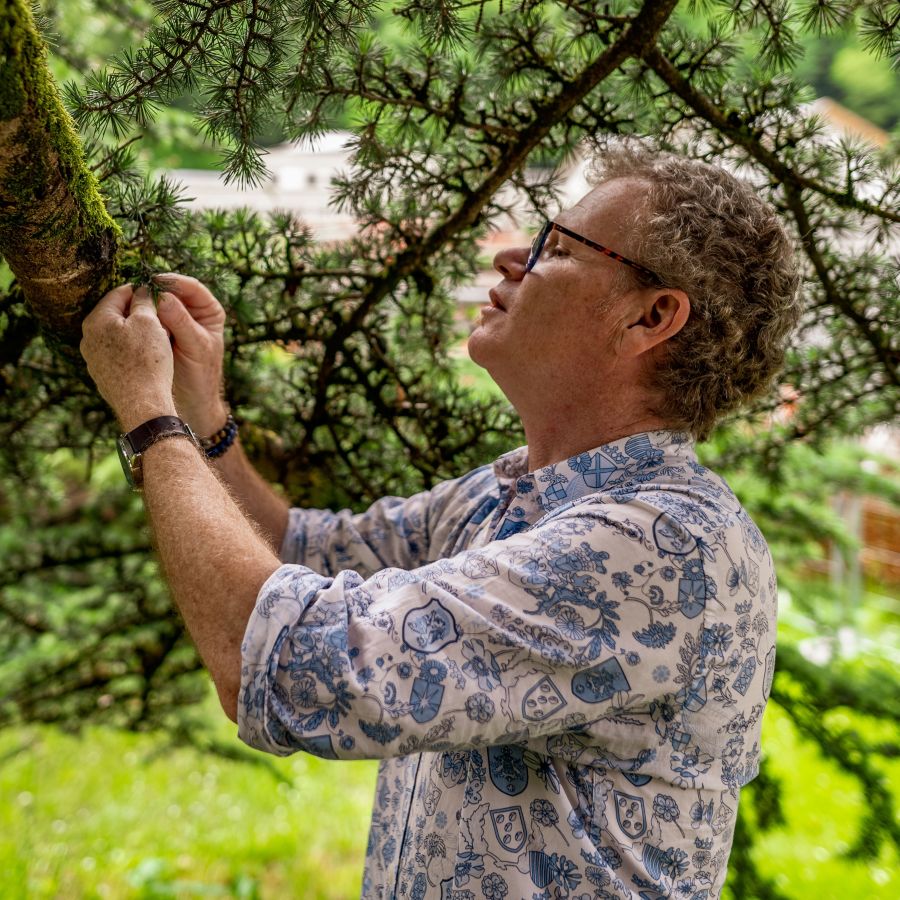
Speaker: Christophe Drénou
Description: A tree of knowledge allows us to represent the connections and linkages between knowledge. Applied to trees, it shows the significant role of two French scientists: Francis Hallé and Pierre Raimbault. Having had them as professors for 4 and 3 years respectively, I will pay tribute to them.
Bio: Doctor in plant architecture, Christophe Drénou is a Research & Development engineer in tree biology at the Institute for Forest Development (CNPF-IDF). He developed the ARCHI method, a practical approach based on the architecture of trees for diagnosing and intervening.
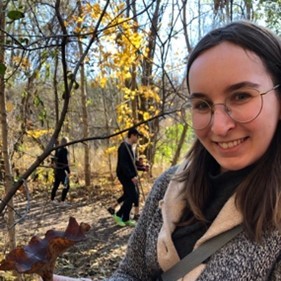
Speaker: Natalie Kennedy, Handa laboratory, UQAM
Description: The soil mesofauna consists of tiny invertebrates, such as mites and springtails, which contribute to important ecosystem functions like organic matter decomposition and nutrient cycling. Despite their abundance in urban soils, the influence of urban forest management practices on these animals is poorly understood. We studied the effects of tree species and planting context on soil mesofauna communities, hypothesizing that stress factors (such as high salinity and compaction) would negatively affect soil mesofauna abundance. Samples were collected from three tree species in four urban planting contexts spread across three municipalities in Greater Montreal.
Bio: My name is Nat Kennedy and I am a third-year doctoral student in the Handa laboratory, studying urban soil biodiversity. During my master's, I studied taxonomy at the Royal Ontario Museum, where I discovered a passion for museum collections. While studying regenerative agriculture during my bachelor's, I noticed that there was very little global research on the effects of land management on soil invertebrate communities. Through my doctoral research, I have been able to combine these two interests by studying the effects of land management on soil invertebrates and contributing specimens to the Canadian National Collection of Insects. I am passionate about this research because I believe that working to treat soils as a valuable ecosystem is essential for creating a prosperous and sustainable world for centuries to come.
Speaker: Christian Messier
Description : Urban trees and forests are subjected to a growing number of climatic and biotic stresses (exotic insects and diseases) that threaten their survival and resilience. In this presentation, I will present the state of climatic risks for major cities around the world (including Montreal) and discuss innovative tools and approaches to evaluate these risks in your cities and towns to better select the next trees to plant.
Bio : Christian Messier is a professor of forest ecology and urban forestry at ISFORT and the CEF of the Université du Québec (UQO and UQAM) since 1992. His expertise is in the development of innovative approaches to urban and natural forest management, from trees to landscapes, to increase the resilience of trees and forests facing global changes. He collaborates with researchers worldwide and is involved in numerous international research networks. He has supervised and graduated more than 100 M.Sc. and Ph.D. students and supervised over 30 postdoctoral fellows. He has published over 350 peer-reviewed articles, 75 reports, 4 books, and 20 book chapters. He has held an NSERC Industrial Research Chair in Urban Forestry since 2010 and a Canada Research Chair in Forest Resilience to Global Changes since 2017. He was recently inducted into the Royal Society of Canada.
Speaker: Simon-Pierre Desjarlais and Benoit Renaud
Description : Simon-Pierre Desjarlais (master arborist) and Benoit Renaud (programmer) will present Arborium, an application specifically developed to meet the needs of arboriculture businesses. This presentation will allow attendees to discover the main features of the tool as well as its added value for managing and improving operational efficiency. Participants will also have the opportunity to ask questions on both strategic and technical aspects, to better understand how Arborium can integrate into their practice.
Bio : Simon-Pierre Desjarlais, entrepreneur and certified master arborist (ISA Board Certified Master Arborist®), brings his field expertise and vision of the arborist profession to the solution.
Benoît Renaud, programmer (information technology instructor), co-creator of Arborium and the related tool SilvX, responsible for the technical and software aspects of the project.
Content presented on Wednesday, November 26, 2025
Opening of the 2025 Fall Arboriculture Rendezvous
Guidelines for the presentations
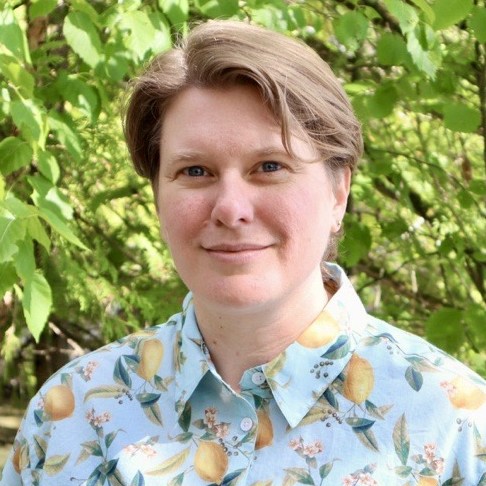
Speaker: Elsa Cousineau, Tree Canada
Description: Tree Canada would like to present an overview of its main funding programs related to greening and tree planting. This presentation will highlight the various options available, including the Canadian Community Canopy Expansion (CCCC) grant program, which includes funding streams for tree planting and the development of plans and studies, as well as a personalized support program, and the Hydro-Québec Greening Fund.
As part of the CCCC, Tree Canada plays a key role in providing technical and strategic support to applicants to help them develop, plan, and implement their greening projects. We will explain how these programs can support the implementation of urban forestry and community greening projects across the province, especially in small communities that do not always have the resources or internal capacity needed to carry out such projects.
Bio: A certified arborist and urban forestry specialist, Elsa Cousineau manages the team of advisors at Tree Canada, where she assists communities in realizing their greening and sustainable development projects.
Speaker: Dominic Bartolacci (CRAUM, ULaval)
Description: Evaluation of different planting pits in urban environments. Testing the health of trees based on several ecophysiological characteristics such as stomatal conductance.
Bio: Master's student in forestry science at Laval University. Passionate about urban forestry for 3 years now.
Speaker: Ravosoa Ramaroson (CRAUM, ULaval)
Description: Construction work in urban areas often leads to root cutting, which can affect the stability and physiology of trees. My presentation will focus on the results of my master's project, which assessed the effects of different root cutting treatments on the ecophysiological responses of two species commonly planted in urban areas, Acer platanoides L. and Tilia cordata Mill. The measurements mainly focused on leaf gas exchanges, carried out using a portable photosynthesis system.
Bio: I hold a bachelor's degree in forestry (2010) and a master's degree in forestry, development, and environment (2014) from the University of Antananarivo, Madagascar. After my studies, I worked at Madagascar National Parks, where I gained experience in biodiversity management and conservation. Since September 2023, I have been pursuing a master's degree in forest sciences at Université Laval, under the supervision of Sivajanani Sivarajah and co-supervision of Ilga Porth. My research project focuses on the impacts of root cutting on the ecophysiological responses of urban trees in Quebec City.
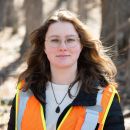
Speaker : Savannah Bissegger O'Connor (CRAUM, ULaval)
Description: A significant proportion of the urban forest cover is located on private and residential land, thus escaping systematic municipal assessments. We envisioned that participatory science (also known as citizen science) could help fill this gap, but it was first essential to verify the quality of the data collected by this approach. This research therefore aimed to evaluate the reliability of participatory science as a data collection tool in an urban forestry context.
As part of an inventory of trees on private land in Quebec City, participating residents consulted ten explanatory capsules or a practical guide to familiarize themselves with the data collection methods before taking their own measurements on their land. In parallel, our research team conducted reference measurements. We then performed statistical tests to compare the measurements collected by residents (non-experts) to those of our team (experts), relying on various characteristics of the trees.
For all the variables studied, the differences between the measurements taken by non-experts and those by experts were negligible or minimal. These results suggest that with simple training, non-experts can provide reliable data in an urban forestry context through participatory science. They also highlight the relevance and reliability of this information for municipalities and their partners, thus offering a practical solution to address the lack of data on trees on private lands.
Bio: Savannah is leading the first inventory of trees on private land in the City of Quebec using participatory science, where residents themselves collect data on their trees. Her interest in urban forestry was sparked during her bachelor's degree at McGill University, when she discovered studies on ecological connectivity in a rapidly suburbanizing region where she grew up. Witnessing the rapid disappearance of orchards and green spaces she loved in favor of housing developments, she became interested in ways to design sustainable urban environments rich in biodiversity. As a research assistant at McGill University's Gault Nature Reserve, Savannah gained experience in participatory sciences and geospatial techniques applied to various projects, ranging from monitoring invasive plants to studying wildlife with drones and thermal imaging. She then led a spatial analysis project on the health and connectivity of green spaces in Montreal, which introduced her to urban ecology. Her master's research combines quantitative and qualitative methods to explore the role of residents in the health and management of the urban forest, notably through tree maintenance and their potential contribution to data collection. Her work demonstrates that by focusing on respect and awareness, it is possible to strengthen citizen mobilization and encourage collaborative and sustainable management of urban green spaces.
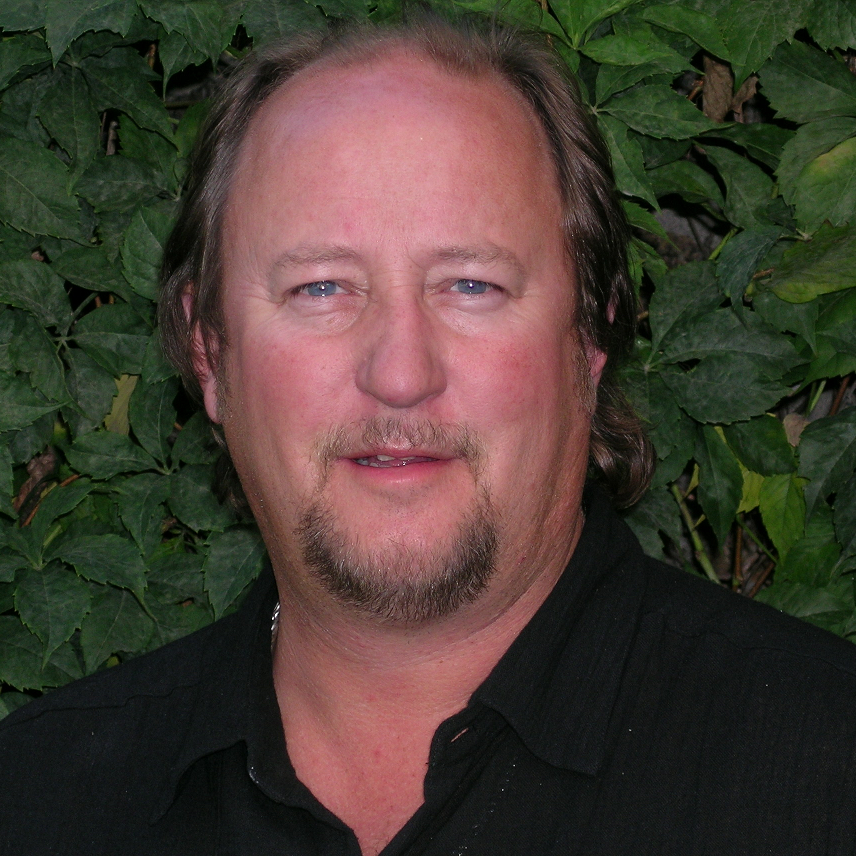
Speaker: Bruno Paquet
Description: Nature of such a program
What are the advantages and limitations for a municipality
What are the impacts on legal civil liability
What are the tools for successful implementation
Questions and discussions with participants
Bio: A municipal manager, recognized speaker and trainer, actively involved in the field of urban forestry and arboriculture, he founded the consulting firm Gestion Arboreta to serve boroughs and cities.
Speaker: Bruno Boulet
Description: Many alluring claims have been made about the ability of forests to trap CO2 and mitigate the greenhouse effect. Nowadays, it is difficult to differentiate, as the information is abundant and the debate politicized. The speaker weaves a guiding thread through this labyrinth to understand the problems, challenges, and real effects of our practices on climate regulation and examines the relevance and sustainability of the proposed solutions.
Bio: A specialist in forest protection and management, Bruno Boulet has extensive experience in forest pathology and forest management and strong knowledge in physiology and ecology. Photographer, writer, and science communicator, he now spends his free time exploring forests. He continues his mission to help you discover the world of trees.
Description : If green spaces have long been neglected in cities, citizen mobilization has allowed for several years to rediscover the beneficial effects of urban forests. Exploring various innovative nature restoration projects in Canadian cities, Urban Forests acts as a true antidote to pessimism by showing us that the ecological solution is closer than it seems.
A film by Anne-Marie Rocher
Starring several of your colleagues!
Duration : Approximately 120 minutes.
Content presented on Thursday, November 27, 2025
Opening of the 2025 Fall Arboriculture Rendezvous
Guidelines for the presentations

Speaker: Maxim Nicol
Description : The global urbanization (55% today, 70% by 2050) accentuates environmental challenges, to which urban forests provide a natural response. However, their management requires reliable models to predict tree growth. This thesis is part of the development of SylvCiT, a free decision-support tool for Quebec municipalities and Hydro-Québec.
The objective is to develop machine learning models capable of predicting the diameter at breast height (DBH) of trees, despite the heterogeneity of municipal inventories, notably the frequent absence of age or planting data. To address this, the study relies on Montreal's historical inventory and favors a chronological approach (variation of DBH between two measurements) enriched by climatic data.
Sixty configurations were tested: the chronological approach improves the mean squared error by 72% compared to the age-based approach. XGBoost proved to be the most effective, achieving an R² of 0.9505 and an MSE of 17.30 cm², while the approach without age data retains excellent results (R² = 0.9422).
This research demonstrates the empirical superiority of the chronological approach and proposes a robust solution for incomplete inventories. Its integration into SylvCiT will allow urban managers to better plan maintenance, replacement, and investments, thereby contributing to the resilience of cities in the face of climate change.
Bio : Maxim Nicol is Vice President of Technology at cVert, a Quebec-based company specializing in residential services, where he oversees information systems, software integrations, and digital transformation projects.
Simultaneously, he is pursuing a master's degree in artificial intelligence at UQAM, focused on predicting urban tree growth from municipal inventories and public external data.
His work, conducted under the SylvCiT project, aims to provide partner municipalities and Hydro-Québec with innovative predictive tools to optimize the management and resilience of urban forests.
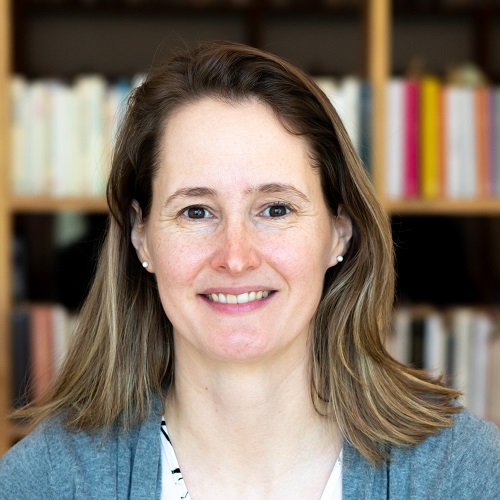

Speaker: Annick St-Denis and Loic Charlebois-Vachon
Description: In 2020 and 2021, 360 trees were planted on an Hydro-Québec site in Saint-Bruno-de-Montarville. Six species with varied characteristics and commonly planted in urban areas were chosen, and four methods of canopy control were compared to a control. This presentation shows the first results of the staking, shading, and pruning techniques used. Comparisons are based on data measured on the trees and on terrestrial LiDAR data to determine which method works best according to the different species.
Bio: Annick St-Denis is a geographer (B.Sc.) and a biologist specializing in forest ecology (M.Sc., Ph.D.). In recent years, she has been particularly interested in the protection and management of urban forests as well as their resilience. She worked for the City of Laval as a consultant in natural environments and urban forestry consultant and for the firm Habitat as a senior project manager. She also coordinated the scientific aspects of the Demain la Forêt – Green Infrastructures project aiming to reforest agricultural streams. She is currently a research professional in Christian Messier's lab at UQAM and coordinates the scientific activities of the ArbrenVil Chair, including the experimental setups for the plantation in Saint-Bruno-de-Montarville and the development of the decision support tool, SylvCiT.
Speaker: Matt Follett
Description : Climate change poses to cause significant impacts to urban forest vitality and health. Practitioners need sound evidence to guide management for future resilience; however, the implications of current nursery production practices potentially adds complexity and uncertainty to our ability to model future impacts.
Bio: With over 25 years’ experience as a practicing arborist Matt Follett holds a Masters in Biology; is a graduate of the Niagara Parks Commission School of Horticulture, ISA certified arborist, and is currently finishing up a PhD in tree biomechanics at the Université du Québec à Montréal (UQAM).

Speaker: Gynnie Tremblay
Description: Though less frivolous, the hedge is an integral part of arboriculture in Quebec. However, this type of landscaping is often the subject of dispute between owners, very often leading to legal proceedings. We will give a brief overview of the applicable legal framework in Quebec and some case law, present practical cases of hedge disputes, and discuss various solution avenues.
Bio: Gynnie Tremblay has been a forest engineer since 1997, holds a master's degree in plant biology from UQAM, and is a member in good standing of the Ordre des Ingénieurs Forestiers du Québec.
Founder of TRAME-VERTE since 2008, she manages and oversees all the projects carried out by the company. This consulting engineering firm is solely dedicated to urban forestry and benefits from an experienced and multidisciplinary team (forest engineer, agronomist, biologist, horticultural technologist, programmer-analyst). The company benefits from an extensive network of important partners and collaborators (engineer, architect, arborist, appraiser, lawyers, etc.) allowing for the realization of complex and varied projects.
Her professional career has allowed her to develop cutting-edge expertise covering all aspects of urban and peri-urban forestry.

Speaker: Yvan Perreault
Description: There are many species of northern nut trees that could repopulate our rural landscapes in Quebec. Here they are with a brief description of each, a presentation of their fruits, and the challenges related to their reintroduction into our nature, whether as plantations, collections, or orchards.
Bio: Co-founder of Jardin des Noix, a farm entirely dedicated to the large-scale cultivation of northern nuts in St-Ambroise-de-Kildare, Yvan Perreault is also the president of CMLM (Cercle des Mycologues de Lanaudière et de la Mauricie) since 2011, secretary and founding member of CPNCQ (Club des Producteurs de Noix Comestibles du Québec), and administrator of the Association Forestière de Lanaudière. Trainer and advisor for the Mauricie Mycological Sector and administrator of the ACPFNL (Association pour la Commercialisation des Produits Forestiers Non Ligneux), he is also a specialized trainer in foraging, cooking, and establishing northern wild edibles using permaculture methods, and he has been working since 2015 to initiate forest farm projects throughout Quebec.
Speaker: Dany Simoneau
Description: A CRM specifically for arboriculture
With a simple and efficient interface, it allows you to:
- Create and edit your quotes
- Track unconfirmed quotes
- Plan your work and display it on an interactive map
- Generate expert reports tailored to clients and municipalities
- Manage invoicing and payment tracking
- Ensure clear and simplified accounting
- Analyze your statistics and performances to optimize your decisions
- Build a client and tree database, with a history of completed interventions, photos, and more
- Receive automatic reminders to never forget a task or follow-up
- Quickly search by address, client, or invoice number
- Access the CRM from any device with a web browser
- Manage multiple types of user accounts: administrator, team leader, worker.
Bio: Graduated as an arboriculturist in 2005, certified and co-founder of Arboquébec, I have over 20 years of experience in the management and maintenance of trees in urban environments. My expertise covers tree maintenance in urban areas, urban soil health, and increasingly biomechanics.
In parallel, I graduated in programming in 2001 and gained substantial experience in web development within an international pharmaceutical company. Programming has remained a passion that I have never stopped practicing.
I combined my two areas of expertise to design a CRM specifically adapted to the needs of arboriculture companies. Already adopted by several companies in Quebec, this CRM is a tool I would now like to introduce to a larger number of professionals in the field.
Registration - Arboricultural Appointment
Nb : Form-160 (161)