
Fall Arboricultural Conference 2026
All sessions in French.
WHEN : November 24-25 and 26
WHERE : Virtual, via Zoom
Preliminary Program
Provisional schedule - Subject to change.
Content presented on Tuesday, November 24, 2026
All sessions in French
Opening of the 2026 Fall Arboriculture Rendezvous
Guidelines for the presentations

Speaker: Pauline Hessenauer, Sustainable Forestry Initiative (SFI)
Description: Dutch elm disease, caused by the fungus Ophiostoma novo-ulmi, continues to decimate populations of American elms (Ulmus americana) in Quebec, including in urban areas where this heritage tree plays an important role in the canopy. This project, made possible thanks to the support of Génome Québec and conducted in collaboration with the City of Québec and the Research Chair in Urban Tree and its Environment, aims to identify trees that have survived the disease and mobilize them to ensure the future of the species in the city. The work begins with field sampling of surviving elms in urban environments. Rather than relying on a single "champion" tree that would then be multiplied and planted everywhere, an approach that would weaken the population in the long term, the team seeks to establish a diverse pool of potentially resistant individuals. This genetic diversity is essential to maintain robust elm populations capable of adapting over time. The selected trees will then be subjected to inoculation tests in a greenhouse, allowing for the confirmation of their actual resistance to the disease before considering their use in municipal planting strategies.
Bio: Pauline Hessenauer is an assistant professor in the Department of Wood and Forest Sciences at Université Laval, where she leads the LEAP (Laboratory of Ecological and Applied Forest Pathology). Her work focuses on the evolutionary genomics of forest pathogens, with a particular interest in Dutch elm disease (Ophiostoma novo-ulmi). Her research program combines population genomics, landscape genomics, and bioinformatics to better understand the dynamics of forest diseases and guide management strategies.


Speaker: Nicolas Pelletier, Urban Environment Project Manager (Nature Québec) and Gilles Raoul Lontsi Meli, Ph.D., Postdoctoral Researcher at Université Laval
Description: Urbanization compromises ecosystem functions by causing biodiversity loss, soil degradation, and increased greenhouse gas emissions. The Research Chair on Urban Trees and Their Environment (CRAUM) develops innovative knowledge and tools that promote the sustainable integration of urban trees and soils.
As part of a project supported by the Ecological Transition Accelerator, CRAUM teamed up with Nature Québec to carry out an innovative project combining greening, restoration of urban biodiversity, scientific research, and knowledge transfer within the urban forestry ecosystem of the City of Québec.
Three formulations of technosols were developed at Université Laval from recycled urban materials, to evaluate their effects on carbon storage, mineral dynamics, soil gas fluxes, and tree growth. After one year, an increase in soil organic carbon was observed in the technosols compared to the control soil. CO₂ fluxes increased with soil temperature, then converged towards the control by the end of summer; CH₄, initially high, decreased to similar levels by the end of summer. Tree growth did not vary between the technosols but remained higher than that observed on the control soil. This technosol construction approach provides a concrete tool for municipalities and can serve as a basis for revising their soil management standards and integrating waste valorization strategies into their greening projects.
Bio:
Nicolas Pelletier has been an Urban Environment Project Manager with the Nature Québec team for nearly 6 years, managing and carrying out mobilization and greening projects.
Lontsi Meli Gilles Raoul has been a postdoctoral researcher at the Research Chair on Urban Trees and Their Environment (CRAUM) for 1 year. His work focuses on the resilience of urban soils and combating climate change. He conducts research on technosols, the impact of biochar use on greenhouse gas fluxes, soil contamination, and tree health. He also contributes to student supervision, data analysis, and scientific publication.
About Nature Québec: Nature Québec advocates for biodiversity and a stable climate by relying on science and collective action. The organization gives a voice to nature, raises awareness, mobilizes, and influences public policies. It takes action on the territory by carrying out and supporting initiatives for the protection of natural environments, ecological restoration, sustainable resource use, and adaptation to climate change.

Speaker: Meg Hanna, Urban Forestry Advisor, Sustainable Forestry Initiative (SFI)
Description: What can we learn from the first organizations to have their urban forest certified? Beyond the audit, their experiences show how a sustainable management framework can help mobilize teams, better link organizational priorities, and make efforts and results more visible. But where to start concretely?
Based on examples from universities and municipalities, this presentation explores lessons learned from the first certifications to the SFI Urban and Community Forest Sustainability Standard. We will examine what auditors look for, how organizations prepare, and what pitfalls to avoid. Participants will discover strategies to structure evidence of compliance, engage the right people, and use the certification process as a lever for continuous improvement. We will see how this approach makes the work of urban forestry professionals visible and strengthens the credibility of the programs and environments we help evolve.
Learning Objectives:
- Recognize how the SFI Urban and Community Forest Sustainability Standard and the certification process can support responsible management of trees and forests in communities.
- Determine the steps and best practices to succeed in an audit of an urban or community forest certification.
- Apply lessons from pioneering organizations to structure management and highlight efforts and results in urban forestry.
Bio:
Content presented on Wednesday, November 25, 2026
All sessions in French

Speaker: Natalie Kennedy, PhD Candidate, UQAM
Description: We studied the effects of different types of urban forest management on soil mesofauna. The mesofauna is composed of microarthropods between 0.1 and 2 mm in length, dominated by mites and springtails. These animals contribute significantly to the diversity of arthropods in urban environments and to soil functioning. Following extensive sampling conducted in three municipalities in the metropolitan area of Montreal, it was found that both the tree species and the context in which they are planted have an impact on the mesofauna community. Analyses of mesofauna abundance showed that tree pits and medians can be important habitats for urban soil mesofauna, as abundance was higher in these sites than in a nearby urban park. In the Experimental Urban Forest, the effect of different types of mulch on mesofauna communities was studied. Ramial chipped wood mulch seems to have a positive effect on mesofauna abundance, but some evidence suggests that black cedar mulches may be less beneficial. At Université Laval, mesofauna communities were sampled from different technosol mixes added to tree pits. After one year, mesofauna were still more abundant in technosols than in standard municipal mixes. Our goal is for this research to help improve practices in urban landscapes to better support living soils.
Bio: Nat Kennedy (PhD candidate under the supervision of T. Handa, UQAM) continued her experiments in the urban forests of the metropolitan area of Montreal. She also conducted fieldwork in the Experimental Urban Forest located on Hydro-Québec land in Saint-Bruno-de-Montarville, as well as in the technosol experiment at Université Laval in Quebec City. She studies mite communities in urban forests based on different types of urban forest management.

Speaker: Annick Saint-Denis, scientific coordinator and associate professor
Description : After more than 15 years of existence, the Chair on Tree Growth Control, also known as "ArbrenVil," is changing its name and its holder (Tanya Handa, UQAM). It will continue to integrate research areas focusing on urban trees, but will also include projects related to urban biodiversity, such as differentiated management, the effectiveness of amendments on tree growth and soil biodiversity, and the fight against invasive exotic species. I will present the latest developments of SylvCiT, our new mobile application project aimed at contributing to the diversity of private trees, the recent results of the project on controlling the growth of tree tops, as well as presenting the new research areas of the Chair on urban biodiversity and the coexistence of humans-energy-nature.
Bio : A geographer and forest ecologist, Annick is particularly interested in the protection, management, and resilience of urban forests. She coordinates the various research facilities at the Experimental Urban Forest of Saint-Bruno-de-Montarville as well as the development of the decision support tool SylvCiT.

Speaker: Guillaume Sainte-Marie, ing. f.
Description: To be announced
Bio:

Speaker : Hugo Bauden
Description: Facing the challenges of urbanization, how to design green spaces that truly support biodiversity?
The results of my study conducted in Gatineau illustrate why the "vertical complexity" of vegetation (a mix of herbaceous plants, shrubs, and trees) is the key factor to enrich urban plant diversity, well before the mere reduction of surrounding asphalt. These findings offer concrete ways to rethink our planning and greening strategies.
Bio: Hugo is a student in urban ecology pursuing a master's in biology at the UQO under the supervision of Sylvain Delagrange.

Speaker: Jeremy Latulippe, Master's Student in Forest Sciences at Laval University
Description: The American elm (Ulmus americana) has long played a major role in urban forests in North America. It is highly prized for its majestic appearance, its ability to mitigate heat islands, and its contribution to urban biodiversity. However, elm populations have been decimated since the 1940s by Dutch elm disease (DED), caused by the pathogenic fungus Ophiostoma novo-ulmi, which undermines current efforts to adapt to climate change and preserve the ecological integrity of urban forests. Although preventive fungicide-based treatments have been developed, they are costly, have variable effectiveness, and require constant monitoring of the trees. While some resistant cultivars and hybrids have been commercialized, they are either derived from other species such as U. pumila or lack the most valued genetic and morphological characteristics of U. americana. Additionally, relying on a limited number of cultivars, even those with partial resistance, could increase the population's vulnerability to mutated strains of O. novo-ulmi due to reduced genetic diversity and limited adaptive potential. Thus, to sustainably combat DED and maintain elm diversity, developing resistant cultivars from local elms should be prioritized over the use of fungicides. Our study aims to characterize native elms in eastern Canada. During the summers of 2025 and 2026, we collected leaves from American elms across Quebec and Ontario, then characterized the genetic structure of the populations in the territory. We assessed the origin and genetic diversity of the populations and identified candidate subjects for future resistance testing.
Bio: Jeremy completed his bachelor's degree in biology at Laval University in the fall of 2024. Throughout it, he discovered phytopathology and developed an interest in plant and fungal genetics during internships in an agronomy laboratory. This is why, in the summer of 2025, he began a master's project aiming to characterize the genetic diversity of the American elm to lay the groundwork for future development programs of DED-resistant elms. This project is conducted under the supervision of Pauline Hessenauer and the co-direction of Sivajanani Sivarajah.
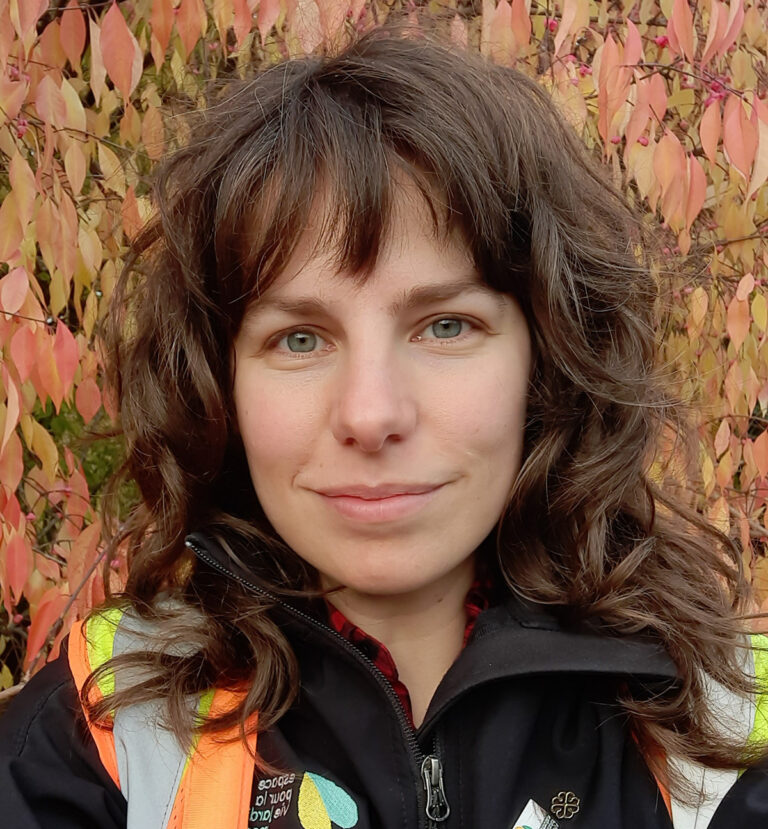
Speaker: Meg Hanna, director and founder, The Hanna Studio
Description : When we compare ourselves, we console ourselves. But what happens when life takes us to the other side of the world, uprooted and transplanted? Shock and wonder meet, adaptation and growth follow. The perspective changes, making way for renewed gratitude for what is, and a responsibility for what will grow.
This presentation is about my first 90 days of arboriculture in Aotearoa | New Zealand, experienced as an expatriate, a lover of trees and landscapes, and a member of the Quebec arboricultural community.
From the indigenous giants of this distant land, to a canopy marked by colonialism, to spaces that exist only because someone chose to protect them: I will share what surprised me and the realities that will shape the future. Like Quebec, this island country and its communities must adapt to a changing world. Nothing is guaranteed.
An invitation to step out of one's habits and preconceived ideas to gain a fresh perspective on arboricultural practice. We work worlds apart, but we cultivate the same thing: the knowledge necessary to care for trees in communities that rely on them.
Bio :
Content presented on Thursday, November 26, 2026
All sessions in French
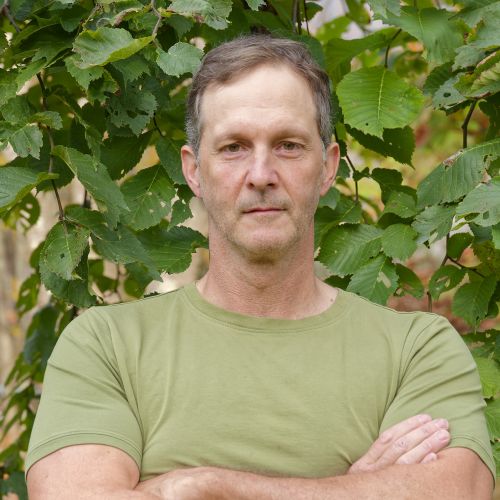
Speaker: Louis-Philippe Fortin,
Description: The roots of trees grown in pots often inherit an unnatural and problematic behavior. If we want to promote better rooting, whether for an appreciable anchoring, for better connection to the trophic network, or for better access to water and nutrients, root corrections during planting are essential. This lecture will allow participants to understand what these defects are and how to correct them, thanks to a scientific approach stemming from numerous research and experiments on the subject.
Bio: Consultant, teacher, lecturer, and coach in arboriculture and urban forestry

Registration - Arborist Meeting 2026
Nb : Form-160 (161)